Anger Is Not the Enemy: Why It's Your Life Force and How to Deal With It

-
20 September 2026
-
22 September 2026

Anger is one of the most useful emotions we have. It shows up when we need something or when someone has crossed a line, and it hands us the energy to do something about it. The danger is never the anger itself. It's the two extremes: swallowing it, or letting it out with no brakes. Below I'll walk you through what anger is for, what suppressed anger looks like, why mothers get the hardest version of this, and five steps for dealing with anger in real life without hurting yourself or the people you love.
What Is Anger For? The Job This Emotion Does
All of our feelings are good. Every one of them is fuel for action. And anger is a genuinely great emotion, with an enormous amount of life force packed inside it.
Anger appears when we need something. The moment we want something, our level of aggression rises a notch on a purely biological level. If we're hungry, we reach out and shout: "Give me that apple, I'm going to eat it." Science backs me up here. In a major review, Carver and Harmon-Jones describe anger as an "approach" emotion: it pushes us toward a goal, unlike anxiety, which makes us pull back and hide.
Anger also protects us. If someone steps on our foot, we get angry and shout: "Get off my foot!"
And when our boundaries are crossed, say, a boss sends over work at 7 p.m. on a Friday marked "Urgent!", or talks to us in a way that's out of line, we get angry and say: "I'll do this Monday morning, and I'm not okay with being spoken to like that." That's what healthy contact with your own aggression looks like. And the better that contact, the easier it becomes to stay steady when someone else's anger comes at you.
Anger also gives us the energy to be ourselves. Energy to earn money and reach our goals. To claim our piece of life. Even sex needs a healthy dose of aggression.
Why Do We Suppress Anger?
I grew up in a culture where anger was frowned upon, and hardly anyone would admit to feeling it. I suspect many of you recognize this from your own families, whatever the country. It happens because people don't see the difference between the emotion and its expression, meaning the action. Anger is a feeling. It lives inside me, and by itself it is not dangerous. But if I scream and hurl insults in a fit of anger, or smash dishes, that's an aggressive act. What can be dangerous is a bad way of expressing the feeling, never the feeling itself.
Very few of our parents, the parents of millennials, understood this difference. When a child first meets this emotion (throwing tantrums, hitting, stomping, breaking and throwing toys), what they heard was: "Don't be angry." They were shamed, scolded, punished. Their first experiments with anger were shut down. So the child never gets to know their own anger and never gets to find, through trial and error, their own unique or even creative way of expressing it.
What Does Suppressed Anger Look Like?
People who've spent a lifetime pushing anger down eventually lose the ability to tell it apart from other feelings. It's hard for them to notice: I'm angry right now, and I have my reasons.
Suppressed anger usually shows up like this:
- you only feel it once it's already peaked, when "the kettle has boiled over," as we say;
- it comes out as passive aggression: jabs, sarcasm, silence, "forgotten" promises;
- it turns inward, as brutal self-criticism or even self-harm.
The research agrees. A meta-analysis of 81 studies found that anger is consistently linked with suppression, avoidance, and rumination (chewing over grievances on a loop) and, conversely, is negatively linked with acceptance and reappraisal. These are correlations, so which comes first is an open question. But one thing is clear: suppression does not put the fire out. And rumination, according to a systematic review of 46 papers, is associated with self-harm.
Mom Rage: Why Anger Is So Hard for Mothers
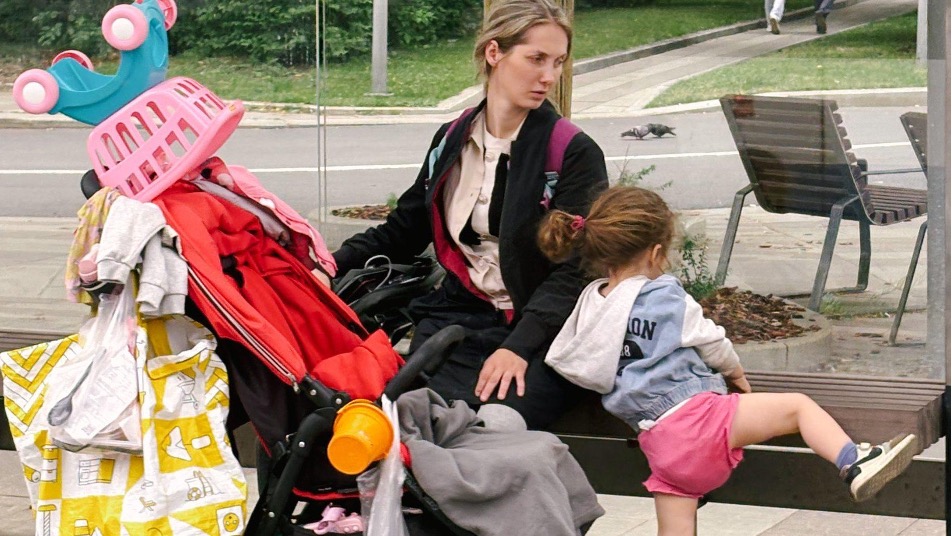
In motherhood, this is one of the toughest topics there is. Society idealizes how a mother relates to her child. She's expected to be endlessly accepting, understanding, patient, always available and ready to help. As if she couldn't possibly feel anything toward her child except unconditional love.
Mothers routinely suppress their anger and consciously hold back from showing it. But layer on exhaustion, unmet needs, burnout, a shortage of money, support, and hands-on help, and the anger piles up. Add to this that the child is emotionally immature, is busy building a will of their own, doesn't want to obey, tests and breaks boundaries, and has no idea how painful their behavior can be for mom. And at some point, mom catches herself yelling, snapping, even physically ready to lash out.
This isn't about one mother being "bad." It's a well-documented mechanism. In a study of 1,551 parents, parental burnout was specifically linked to neglect and violence toward children, more strongly than to any other outcome measured.
When the wave passes, mom comes back to herself and is horrified by what just happened. What follows, inevitably, is remorse, guilt, shame, and a sense of being fundamentally "bad."
After an episode like this, mom starts "trying harder": showering the child with attention and care, ignoring her own needs again, holding back, enduring, storing up anger. Sooner or later that leads to the next blow-up. Interestingly, this loop shows up in the data too. In a study that followed 228 parents over several months, episodes of aggression toward children predicted a rise in parenting perfectionism two months later. First the blow-up, then "I'll be perfect," then the blow-up again.
And holding it in has a price of its own. In an experiment with 104 parent-child pairs, parents who were asked to suppress their emotions during a shared play task became less warm and less responsive, and the quality of the connection with their child dropped noticeably.
It's a vicious circle, and getting out of it alone is sometimes close to impossible.
How to Deal With Anger: 5 Steps to Make Friends With It
Once we understand that anger is fuel, our task is to learn to manage it and use it as a resource, not as a wrecking ball. Honestly, this is deep inner work. Here are a few steps for handling your anger in a healthy way in everyday life.
Step 1. Catch your anger at low volume and own it
The first and most important thing: notice your anger while it's still quiet, and acknowledge it. Literally tell yourself: "I'm angry right now, and I have every right to be." Try rating your anger on a scale from 0 to 10. This pulls you out of the state of "I am the emotion" and into a meta-position, the position of an observer.
This isn't just a nice metaphor. When we put a feeling into words, activity in the amygdala (the brain's alarm-and-mobilization center) goes down, while self-control regions in the prefrontal cortex switch on.
Step 2. Find the anger in your body
Next, notice how this feeling lives in your body. Is your jaw clenched? Your fists? Are your shoulders tight? Or are your legs itching to run somewhere and do something?
Body sensation is your anchor to reality. It lets you ground yourself. People who read their body's signals more accurately also handle emotions better: in a small study of 28 participants, accuracy at sensing one's own heartbeat was linked to how successfully people could dial down negative emotion.
Step 3. Find the reason: what do I need right now?
Now find the cause. Ask yourself: "What do I need right now? Or how have my boundaries been crossed?" You may end up with an impressive list.
Step 4. Separate the feeling from the action
Then you separate the feeling from the action. This creates the pause that saves you from impulsive explosions and lets you choose a form of expression that is healthy and actually meets the need.
An example from my own life. I want to rest, and my child flat-out refuses to go down for a nap. "Here are your cartoons, watch them, and I'm going to lie down, rest, and make myself a cup of tea." Or I ask for help, hand the kids off to someone, and take some quiet time.
Another example. If someone close to you keeps handing out unsolicited advice, express your anger as a request, a demand, or a limit: "I don't like getting advice I didn't ask for. Right now I don't need advice. I need you to make me some tea and play with the kids."
An important insight I discovered in my own therapy: when we show a low-grade dose of anger in a relationship, it brings us closer. But when we grit our teeth and put up with things, the resentment builds and inevitably pushes us apart.
Step 5. When nothing can be changed: sit with the powerlessness
There are situations where the problem simply can't be solved right now, under these circumstances. And then we have to live through our own powerlessness.
"I want to be on that plane, and I'm not going to make it. There it goes, up in the sky. Tickets bought, money spent, hotels booked, plans laid out. I'm furious about all of it, I desperately want to do something, and there is nothing I can do." And so we have to feel the powerlessness, even despair, and everything else that hurts to feel.
This is exactly the spot where parents snap, yelling at or hitting their kids because they won't listen and, let's say, won't put their sneakers on when we're rushing for a flight. They cannot bear their own powerlessness. Anger here is an attempt to change the situation, to "punch through" a reality that won't give way.
The best way to discharge this feeling is to admit it: "Yes, I'm powerless, and I can't change this." And to let yourself meet the sadness about it, and cry.
The overgeneralization trap: "I'm a bad mother"
There's a trap my clients fall into all the time: they feel that if I'm powerless against my child's stubbornness right now, then I'm powerless at everything, period. They generalize: "I'm a bad mother," "I can't cope with my life," or "What kind of person can't even make a flight?"
The key here is to separate powerlessness in one specific spot from your overall competence.
You can tell yourself: "Yes, right now, in this minute, I truly can't do anything. But this powerlessness applies only to this one episode, here and now. It does not make me a bad parent overall. In other situations, when I cook, when I comfort, when I work, I do just fine."
This realization preserves your energy and gives you back your footing. We stop fighting reality. We accept our limits and our child's limits, because we are not omnipotent. We're just living human beings.
Reclaim what you can control
And in fact, once that inner battle quiets down, we can reclaim our zone of influence. Yes, the plane left without us, and there's nothing I can do about that. So what can I influence right now?
"I can try to get some of the ticket money back, move the booking, make a pot of soup. Or I can put on those same cartoons and rest."
Instead of a Conclusion
Here's what matters: nothing we've talked about today is about becoming a person with iron self-control in a single day. This is slow, gentle inner work. And when we do it and come face to face with our limits, a paradox happens: we become free. Free to be an imperfect but living human being.
When to Get Professional Support
One article won't fix this, and that's okay. If you keep blowing up at the people closest to you and cycling through "explosion, guilt, trying harder, explosion again," if your anger mostly turns against yourself, and especially if you notice thoughts of hurting yourself, please don't stay alone with it. A therapist or clinical psychologist works with exactly this. If you're having thoughts of self-harm, reach out right away rather than waiting; in the US you can call or text 988, and most countries have a free crisis line.
Quick Answers to Common Questions
Is anger a bad emotion? No. Anger is a signal that we need something or that a boundary has been crossed, plus the energy to fix it. Only actions can be bad: yelling, insults, hitting. The feeling itself is safe.
What happens if you keep suppressing anger? It doesn't disappear. It changes shape: passive aggression, harsh self-criticism, explosions "out of nowhere" once the kettle has boiled over. A meta-analysis of 81 studies links anger specifically to suppression and rumination rather than acceptance.
I feel rage toward my child. Does that make me a bad mom? No. Nearly all parents feel anger at their children, especially when exhausted and burned out, and research ties this to depletion, not to a lack of love. What matters is what you do with the anger: notice it early, find the need behind it, and choose how to express it.
How do I calm down fast when anger has already peaked? Name the feeling out loud ("I'm at an 8 out of 10 right now"), locate it in your body (jaw, fists, shoulders), ask yourself what you need right now, and only then choose an action. The pause between feeling and action is your main tool.
Carver C.S., Harmon-Jones E. Anger is an approach-related affect: evidence and implications. Psychological Bulletin, 2009. (https://pubmed.ncbi.nlm.nih.gov/19254075/). By Charles S Carver, Eddie Harmon-Jones. Psychol Bull
. 2009 Mar;135(2):183-204. doi: 10.1037/a0013965. Accessed 19 Sep 2026.
Pop A. et al. Anger and emotion regulation strategies: a meta-analysis (81 studies, 115 effect sizes). Scientific Reports, 2025. (https://pubmed.ncbi.nlm.nih.gov/40011764/). By Gabriela Viorela Pop, Diana-Mirela Nechita, Andrei C Miu, Aurora Szentágotai-Tătar. Sci Rep. 2025 Feb 26;15(1):6931. doi: 10.1038/s41598-025-91646-0. Accessed 19 Sep 2026.
Coleman S.E. et al. The relationship between rumination and NSSI: a systematic review and meta-analysis (46 papers). British Journal of Clinical Psychology, 2022. (https://pubmed.ncbi.nlm.nih.gov/34806214/). By Sophie E Coleman, Brendan J Dunlop, Samantha Hartley, Peter J Taylor. Br J Clin Psychol. 2022 Jun;61(2):405-443. doi: 10.1111/bjc.12350. Accessed 19 Sep 2026.
Mikolajczak M., Brianda M.E., Avalosse H., Roskam I. Consequences of parental burnout: its specific effect on child neglect and violence. Child Abuse & Neglect, 2018. (https://pubmed.ncbi.nlm.nih.gov/29604504/). By Moïra Mikolajczak, Maria Elena Brianda, Hervé Avalosse, Isabelle Roskam. Child Abuse Negl. 2018 Jun:80:134-145. doi: 10.1016/j.chiabu.2018.03.025. Epub 2018 Apr 5. Accessed 19 Sep 2026.
Schittek A. et al. Does Parenting Perfectionism Ironically Increase Violent Behaviors from Parent towards Children? Longitudinal study (228 parents). Children, 2023. (https://pmc.ncbi.nlm.nih.gov/articles/PMC10605908/). By Alice Schittek, Isabelle Roskam, Moira Mikolajczak. Children (Basel). 2023 Oct 19;10(10):1704. doi: 10.3390/children10101704. Accessed 19 Sep 2026.
Karnilowicz H.R. et al. Not in front of the kids: effects of parental suppression on socialization behaviors during cooperative parent-child interactions. Emotion, 2018. (https://pmc.ncbi.nlm.nih.gov/articles/PMC6764913/). By Helena Rose Karnilowicz, Sara F Waters, Wendy Berry Mendes. Emotion. Author manuscript; available in PMC: 2020 Oct 1. Accessed 19 Sep 2026.
Lieberman M.D. et al. Putting feelings into words: affect labeling disrupts amygdala activity in response to affective stimuli. Psychological Science, 2007. (https://pubmed.ncbi.nlm.nih.gov/17576282/). By Matthew D Lieberman, Naomi I Eisenberger, Molly J Crockett, Sabrina M Tom, Jennifer H Pfeifer, Baldwin M Way. Psychol Sci. 2007 May;18(5):421-8. doi: 10.1111/j.1467-9280.2007.01916.x. Accessed 19 Sep 2026.
Füstös J. et al. On the embodiment of emotion regulation: interoceptive awareness facilitates reappraisal. Social Cognitive and Affective Neuroscience, 2012. (https://pmc.ncbi.nlm.nih.gov/articles/PMC3831556/). By Jürgen Füstös, Klaus Gramann, Beate M Herbert, Olga Pollatos. Soc Cogn Affect Neurosci. 2012 Sep 23;8(8):911–917. doi: 10.1093/scan/nss089. Accessed 19 Sep 2026.


In this article
- What Is Anger For? The Job This Emotion Does
- Why Do We Suppress Anger?
- What Does Suppressed Anger Look Like?
- Mom Rage: Why Anger Is So Hard for Mothers
- How to Deal With Anger: 5 Steps to Make Friends With It
- The overgeneralization trap: "I'm a bad mother"
- Instead of a Conclusion
- When to Get Professional Support
- Quick Answers to Common Questions
Related articles


Start Your Personalized Program



.svg)
.svg)