Are More Men Really Getting Vasectomies? What the Numbers Actually Show

-
30 October 2026
-
22 October 2026

The headlines all sound alike: "men are flocking to vasectomy clinics," "urologists report waitlists doubling." It makes for a good story. But what does the medical data, rather than the news cycle, actually say? The answer turns out to be more interesting than a simple yes or no.
The short answer
Yes, in several countries vasectomy is genuinely on the rise. In the United States, the vasectomy rate among privately insured men grew 26 percent between 2014 and 2021 and then jumped again after 2022. In France, the number of procedures multiplied 15-fold in 12 years. Globally, however, the trend runs the other way: according to the United Nations, male sterilization fell from 6 percent of all contraceptive use in 1995 to less than 2 percent in 2020. So the rise is real, but it is local and uneven. In some countries men are indeed choosing vasectomy more often; in much of the world the method has all but disappeared.
What a vasectomy is, in plain terms
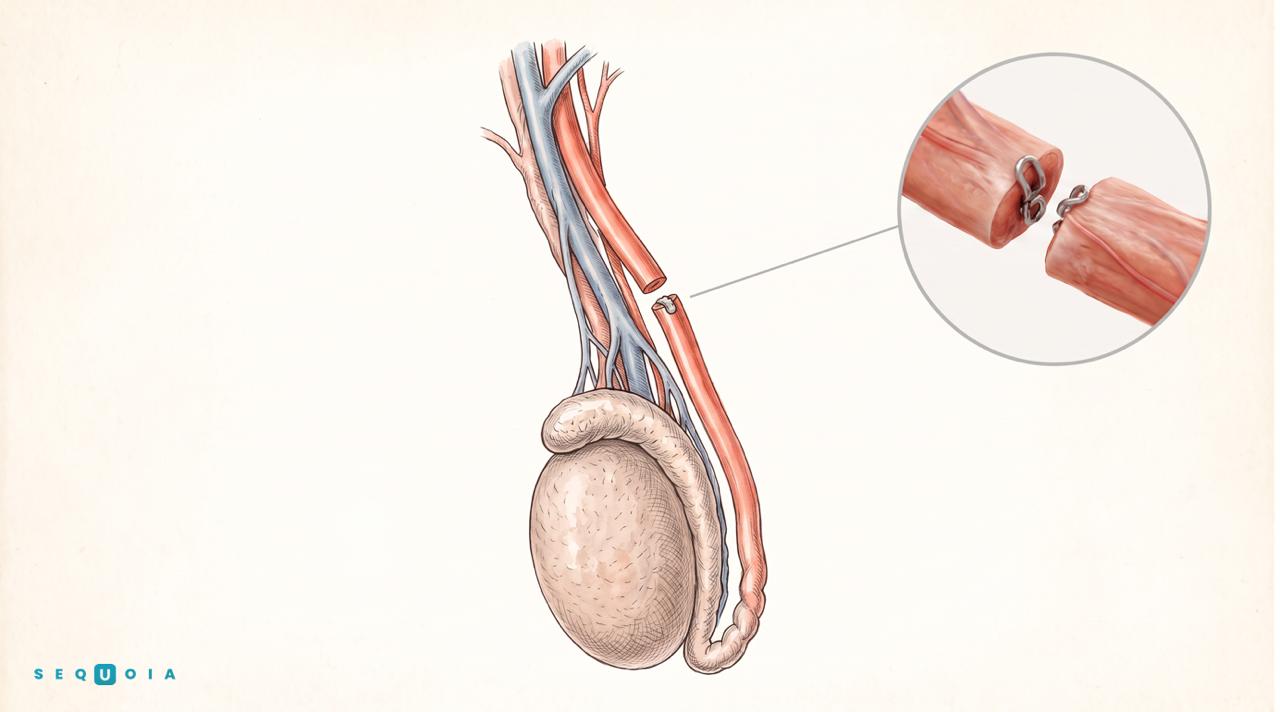
A vasectomy is a procedure that cuts or blocks the vas deferens, the two thin tubes that carry sperm from the testicles into the semen. Picture a plumbing system where one branch line is shut off: the water (semen) still flows, just without one ingredient. The testicles keep producing sperm and testosterone; the sperm simply never make it out and are reabsorbed by the body.
The American Urological Association (AUA) recommends a minimally invasive technique such as the no-scalpel method, in which the skin of the scrotum is punctured rather than cut. The procedure takes about 15 to 30 minutes and is done in the office under local anesthesia. An estimated 500,000 vasectomies are performed in the United States each year.
United States: the rise began before the headlines
The most talked-about surge is tied to the Supreme Court's June 2022 decision in Dobbs v. Jackson, which ended the federal right to abortion. But the trend started earlier.
A study by Huang and colleagues published in Urology in 2023 analyzed insurance claims for men aged 18 to 64 from 2014 to 2021. The share of men having a vasectomy in a given year rose from 0.427 percent to 0.537 percent, a 26 percent increase. The striking part is who drove it: groups once considered "atypical" for the procedure. Among childless men the relative increase was 61 percent, among single men 41 percent, and among men aged 18 to 24, 37 percent.
After Dobbs the curve steepened. A 2025 review in the International Journal of Impotence Research pulled the evidence together: Google searches for "vasectomy" rose sevenfold in the ten days after the ruling, and claims data showed roughly 20 percent more vasectomies in the seven months after Dobbs than in the seven months before. In the U.S. Military Health System (Pierson and colleagues, 2024), 2022 was a record year with 22,248 procedures, 19.7 percent above the 2018 to 2021 average, and in Texas, where abortion restrictions are among the strictest, the June to December increase reached 29 percent.
The most recent study, by Corsi and colleagues (Urology, 2026), covered 55 million men in the Epic Cosmos database and found that the spike was not a blip. The share of men under 40 among those getting vasectomies rose from 25 percent to 55 percent, and the share of unmarried men from 12 percent to 18 percent. The authors describe it as the first documented shift in reproductive decision-making to persist for more than three years.
What this means in practice: in the United States, vasectomy is no longer "the operation for a 40-something father of three." It is increasingly chosen by younger men who have decided not to have children at all, or who do not want their reproductive options to depend on the abortion laws of their state.
Europe: France surges, Britain slips
Europe shows that the rise in vasectomy is not just an American political story.
France. A study by Roland and colleagues using the national health data system SNDS (Perspectives on Sexual and Reproductive Health, 2025) recorded an increase from 1,940 vasectomies in 2010 to 30,288 in 2022, a 15-fold rise. The procedure rate climbed from 9.2 to 141.1 per 100,000 men aged 20 to 70. In 2021, for the first time in French history, male sterilizations outnumbered female ones: 21,166 versus 20,938. By 2022 the ratio was three vasectomies for every two tubal ligations. The average age of patients dropped from 44.1 to 40.7 years.
United Kingdom. Here the story reverses. NHS Digital data analyzed by Wydera and Wilson (AJOG Global Reports, 2022) show vasectomies in public contraceptive services falling from about 30,400 in 2004/2005 to 10,880 in 2015/2016, a 62 percent decline. Numbers recovered slightly afterward but never exceeded 12,200 a year. The authors note that private clinics are not captured in these figures, so the real decline may be smaller.
The rest of Europe. A survey of urologists in five countries (Andrology, 2022) found the highest volume per urologist in the Netherlands, about 63 vasectomies a year, followed by Belgium and France. According to Jacobstein and colleagues, Belgium is one of only four countries worldwide where vasectomy prevalence rose by more than half a percentage point over the most recent decade, from 7.0 to 8.4 percent of couples.
Worldwide: the method is losing ground
Zoom out to the global level and talk of a "vasectomy boom" looks odd. The UN report World Family Planning 2022 found that male sterilization accounted for less than 2 percent of contraceptive use worldwide in 2020, down from 6 percent in 1995. Female sterilization remains the single most common method on the planet, at 23 percent of contraceptive users, or about 219 million women.
The analysis by Jacobstein and colleagues in Global Health: Science and Practice (2023), covering 95 countries, paints an even starker picture. In 2019 about 17 million women relied on a partner's vasectomy, down from 44 million in 2001. The global ratio of female to male sterilization widened from 3:1 in 1991 to 13:1 in 2019, and in India it reaches 76:1. The authors attribute this to persistent myths about the procedure's effect on masculinity and sexual performance, a shortage of trained providers, and decades of family-planning programs built around women alone.
The honest conclusion, then: men are indeed choosing vasectomy more often in the United States, France, Belgium, South Korea, Taiwan and Colombia. But in most of the world, the burden of permanent contraception still falls on women.
Why men are choosing the procedure
Trend studies rarely ask men "why," but several drivers emerge from the data.
- The legal environment. In the United States, the surge coincided with abortion restrictions, and growth was stronger in states with strict laws and in Democratic-leaning counties (22 percent versus 7 percent), pointing to a deliberate response to external circumstances.
- Deciding not to have children. Childless and single men drove the largest increases in the United States. In a study by Nguyen and colleagues (American Journal of Men's Health, 2024) at a single California clinic, 17 percent of patients were childless and 15 percent had no partner.
- Redefining roles within couples. The French data, where vasectomy overtook female sterilization, are interpreted by the authors as a shift toward sharing contraceptive responsibility between partners.
- Simplicity and safety. The AUA notes that vasectomy is as effective as tubal ligation but cheaper, safer, less painful and quicker to recover from.
What to know before deciding
Rising popularity does not make the questions men ask at consultation go away. Here is what the guidelines and reviews say.
Reliability. According to the AUA guideline, the risk of pregnancy after vasectomy is roughly 1 in 2,000, provided a follow-up semen analysis has confirmed the absence of sperm. A repeat procedure is needed in no more than 1 percent of cases. One important caveat: the effect is not immediate. Until the "old" sperm have cleared from the tubes, another form of contraception is needed, and sterility is confirmed by a semen test a few months later.
Pain. Chronic scrotal pain severe enough to affect quality of life occurs in about 1 to 2 percent of men. Most of them do not need further surgery.
Testosterone and sex. This is the biggest myth. A systematic review by Helm and colleagues (Translational Andrology and Urology, 2025) pooled 19 studies with 4,081 men. Not one reported worse erectile function: six found no change and three found improvement. The average erectile-function score on the IIEF scale was 27.2 before the procedure and 28.3 after. Sexual desire, orgasm and satisfaction either stayed the same or improved slightly. The AUA puts it plainly: psychological, sexual and endocrine problems are rarely encountered after vasectomy. The testicles keep producing testosterone at the same level.
Prostate cancer. A question debated for decades. A meta-analysis by Baboudjian and colleagues (European Urology Open Science, 2022) pooled 37 studies covering nearly 17 million men. On paper there is an association with prostate cancer of any grade (odds ratio 1.23), but it nearly vanishes in high-quality studies (1.06) and is absent for lethal prostate cancer (1.01). The authors suggest the residual association most likely reflects the fact that men who have had a vasectomy see urologists more often and get more PSA tests. The AUA has taken a clear position: vasectomy is not a risk factor for prostate cancer, and clinicians do not need to raise it in pre-procedure counseling.
Reversibility. Treat a vasectomy as permanent. Surgical reversal is possible, as is sperm retrieval for IVF, but as the AUA stresses, these options are not always successful and can be expensive. If there is any doubt, discuss sperm banking with your doctor before the procedure.
Key takeaways
- In the United States, vasectomies rose 26 percent between 2014 and 2021, and the post-2022 surge has held for more than three years.
- In France, procedures multiplied 15-fold, and since 2021 more men than women have been sterilized there.
- Globally, male sterilization fell from 6 percent to under 2 percent of contraceptive use in 25 years; in the UK, procedures dropped 62 percent.
- Vasectomy does not affect testosterone, erections or desire; the pregnancy risk after confirmed sterility is about 1 in 2,000.
- The link to prostate cancer all but disappears in high-quality studies and is absent for lethal disease.
- Plan on it being permanent: reversal is possible but not guaranteed.
Frequently asked questions
Is a vasectomy forever? Plan for it to be. Surgical reversal and sperm retrieval for IVF exist, but neither guarantees success and both can be costly.
Will my testosterone or sex drive drop? No. A systematic review of 19 studies found no case of worsened erectile function; the testicles continue to produce testosterone as before.
Does vasectomy raise prostate cancer risk? Per the AUA, no. The largest meta-analysis shows the residual association nearly disappears in high-quality studies and is absent for lethal prostate cancer.
When can I stop using other contraception? Only after a follow-up semen analysis confirms there are no sperm. Until then, the risk of pregnancy remains.
Why are vasectomies falling worldwide if they are rising in the US and France? The growth is concentrated in a handful of high-income countries. In most of the world, myths about masculinity persist, trained providers are scarce, and family-planning programs are built around women.
Trends in the Vasectomy Rate Among Privately Insured Men Aged 18-64 in the United States Between 2014 and 2021 (https://pubmed.ncbi.nlm.nih.gov/37353084/). By Huang Z, Hyman MJ, Raheem OA. Urology. 2023 Sep:179:80-86. doi: 10.1016/j.urology.2023.06.013. Epub 2023 Jun 21. Accessed 22 Oct 2026.
Sustained Rise in Vasectomy Rates After Dobbs v. Jackson: A nationwide analysis using Epic Cosmos (https://pubmed.ncbi.nlm.nih.gov/42486412/). By Corsi N, Roberts S, Able C, et al. Urology. 2026 Sep:215:193-196. doi: 10.1016/j.urology.2026.07.028. Epub 2026 Jul 22. Accessed 22 Oct 2026.
A review of the changing landscape of vasectomy trends in the United States in the post-Dobbs era (https://www.nature.com/articles/s41443-025-01053-2). International Journal of Impotence Research. 2025. By Brittany D. Berk, Raevti Bole, Scott D. Lundy & Sarah C. Vij. Published: 04 April 2025. Accessed 22 Oct 2026.
Vasectomy incidence in the military health system after the reversal of Roe v. Wade (https://www.nature.com/articles/s41443-024-00905-7). International Journal of Impotence Research. 2024. By Pierson BC, Banaag A, Janvrin ML, et al. Published: 18 May 2024. Accessed 22 Oct 2026.
Comparison of Childless and Partnerless Vasectomy Rates Before and After Dobbs v. Jackson Women's Health Organization (https://journals.sagepub.com/doi/10.1177/15579883241260511). American Journal of Men's Health. 2024. By Nguyen V, Li MK, Leach MC, Patel DP, Hsieh TC. First published online June 13, 2024. Accessed 22 Oct 2026.
Vasectomy Procedures on the Rise in France From 2010 to 2022.(https://pmc.ncbi.nlm.nih.gov/articles/PMC12204126/). Perspect Sex Reprod Health. 2025 Jun 19;57(2):154–161. doi: 10.1111/psrh.70013. By Roland N, Jourdain H, Weill A, Lebâcle C, Zureik M. Accessed 22 Oct 2026.
A 16-year overview of vasectomy and vasectomy reversal in the United Kingdom(https://pmc.ncbi.nlm.nih.gov/articles/PMC9563195/). AJOG Glob Rep. 2022 Sep 18;2(4):100105. doi: 10.1016/j.xagr.2022.100105. By Wydera S, Wilson A. Accessed 22 Oct 2026.
European countries have different rates of sperm cryopreservation before vasectomy and at the time of reversal (https://onlinelibrary.wiley.com/doi/full/10.1111/andr.13182). Andrology. 2022;10(7):1286–1291. By Degraeve A, Roumeguere T, Tilmans G, et al. Published: 09 April 2022. Accessed 22 Oct 2026.
Down But Not Out: Vasectomy Is Faring Poorly Almost Everywhere. We Can Do Better To Make It A True Method Option (https://pmc.ncbi.nlm.nih.gov/articles/PMC9972380/). By Jacobstein R, Radloff S, Khan F, et al. Glob Health Sci Pract. 2023 Feb 28;11(1):e2200369. doi: 10.9745/GHSP-D-22-00369. Accessed 22 Oct 2026.
United Nations Department of Economic and Social Affairs, Population Division. World Family Planning 2022: Meeting the changing needs for family planning. 2022. (https://desapublications.un.org/file/1083/download). Accessed 22 Oct 2026.
Vasectomy: AUA Guideline. American Urological Association, 2012; amended 2015. (https://www.auanet.org/guidelines-and-quality/guidelines/vasectomy-guideline). By Sharlip ID, Belker AM, Honig S, et al. Accessed 22 Oct 2026.
A systematic review evaluating the effects of vasectomy on male and female sexual function and satisfaction (https://pmc.ncbi.nlm.nih.gov/articles/PMC12779440/). By Helm M, Pipinos M, Glassman J, Albers G, Deibert CM. Transl Androl Urol. 2025 Dec 26;14(12):4002–4011. doi: 10.21037/tau-2025-494. Accessed 22 Oct 2026.
Vasectomy and Risk of Prostate Cancer: A Systematic Review and Meta-analysis (https://pmc.ncbi.nlm.nih.gov/articles/PMC9130083/). By Baboudjian M, Rajwa P, Barret E, et al. Eur Urol Open Sci. 2022 May 19;41:35–44. doi: 10.1016/j.euros.2022.04.012. Accessed 22 Oct 2026.


Related articles


Start Your Personalized Program



.svg)
.svg)

